

When Caryl and I began traveling twenty-plus years ago, we had very few options when it came to planning. Life is too short and money too tight to eat bad food or stay in crappy hotels. So about December of each year we would begin shopping, first for vacation spots and then for books about that spot.
The right travel guide (Mobil used to publish our favorite) could steer us toward fantastic restaurants, attractions, and hotels that fit our budget and our demographics. But today, fortunately, something far better than the Mobil Guide exists.
It's you. And you. And you. And you. All of you joining together through a variety of Internet sites and applications to express your opinions about everything from books to restaurants to doctors to handymen. Once our best option was looking at the opinions and evaluations of a few "experts" who wrote for Fodders and Consumer Reports and newspapers.
Now I can ask you - thousands and thousands of you - what you think of a certain book, travel destination, or restaurant. And, like the Olympics, I can throw out the high and low scores and come up with a pretty decent picture of what I'm going to get if I spend my money on this attraction or that hotel.
ReviewPush published an article in 2012 explaining point by point how and why online reviews are so important. You can read it here: http://www.reviewpush.com/blog/how-online-reviews-impact-your-business/.
As the article points out, we are now blessed with the opportunity to hear from dozens, hundreds, or thousands of like-minded people on a variety of subjects for which we share a common interest. As we read the reviews, it is even possible to say, "Wow, this person was having a really bad day. I'm not sure I trust their opinion on that particular restaurant." On TripAdvisor, we can even read multiple reviews by the same person to see if they are easy or hard graders. (Since TripAdvisor almost always sends me to great restaurants, hotels, and attractions, I very seldom need to write bad reviews.)
The moral of the story is this: If you like (or dislike) something, your opinion matters. Those who have read The Ecuadorian Deception are probably tired of me asking them to post reviews on amazon.com. However, I know - and research validates - that book buyers are fiercely reliant on those reviews to help them make their purchases. I even heard one person, in discussing books, say he chose a particular novel because some of the reviewers claimed it had large amounts of gratuitous violence, sex, and bad language. This person, a doctor, said he liked that in a novel. (He may not enjoy The Ecuadorian Deception, by the way.)
That's not how I pick my books, but hey, it works for him. And it shows that even people with very different points of view can do you a great service in helping you make your next purchase. If you're not on sites like www.tripadvisor.com, you're missing out on a wonderful resource.
And, if you haven't written your review yet of the latest book you've read, it's time to get cracking at www.amazon.com. Enough said.
Subscribe To

 Posts
All Comments
Posts
All Comments
Saturday, January 25, 2014

Wednesday, January 15, 2014
Elvis, Johnny Cash, and Roy Orbison
I met someone today who said, "Your name is very familiar to me."
It turns out he had seen a story on the Internet that I wrote. The piece was part of a series on famous people from West Texas. If you aren't from West Texas (or even if you are), you may not realize how many very famous people came from there:
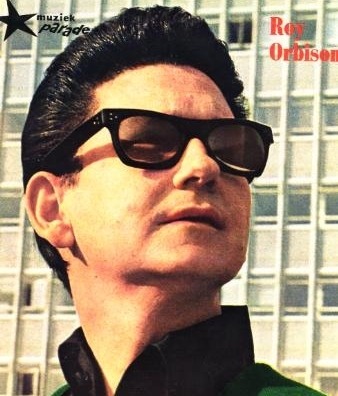 |
| Roy Orbison |
I interviewed hundreds of people and the stories I gathered were priceless.
Larry Gatlin told me of the time when he and his brothers were small and they were in a talent contest competing against Roy Orbison. By this time Roy was a young adult and the leader of a band called the Wink Westerners. Momma Gatlin knew the winner would be chosen by the loudest audience applause. She told the three boys to smile really sweet and pretty at all the sixteen-year-old girls in the audience like they would a favorite babysitter.
It worked. They won. Larry also told me about watching Roy on local TV when he hosted an afternoon program for teens sponsored by Pioneer Furniture. Ah, the days of live local television.
 |
| Larry Gatlin |
I worked for over a year to get permission to interview Charles Harrelson at the Supermax Prison in Colorado. It is harder to get into than Fort Knox, but I was one permission slip away from getting in. And then came the news. Charles Harrelson died of a heart condition.
 |
| Charles Harrelson |
But the most fun research to do was on the day Johnny Cash and Elvis Presley discovered Roy Orbison and set him on his path to stardom. Cash, Presley, Wanda Jackson, and Floyd Cramer were playing a concert at Midland High School. That afternoon Cash was to appear on the Pioneer Furniture Show to invite people out to the concert. Cash was riding high on his first number one record, "Cry, Cry, Cry."
While waiting to go on, Cash heard Orbison sing. He reported to everyone who would listen that the Wink native had the voice of an angel and was the ugliest human being he had ever seen. Talk about a left-handed compliment.
Working on the story carried me back in time to the homes in Midland that Elvis hung out at whenever he came in concert (he played in Texas a lot before he made it nationally). I talked to former Midland High students who were there for the concert. And I stood at the spot backstage where Cash introduced Orbison to Elvis.
If you want to read the story, it's still online on several websites. Just Google Bear Mills, Elvis, and Roy Orbison.
Bob Dylan says songs are just looking for a ride into town and he's been fortunate enough to give a few good ones a lift. I found the story in my novel, The Ecuadorian Deception, was the same way. But there are other stories that lie hidden like a secret treasure, waiting to be dug up. That's what it was like uncovering the Elvis/Roy Orbison/Johnny Cash story. How many others are out there, just waiting to be discovered?
Friday, January 10, 2014
The Never-Ending Movie Inside the Mind
One of the questions I get most often is, "How do you find time to write unless you're a full-time author?" The easy answer is that if you're willing to give up sleep, you find all kinds of time to do things. Actually, that was far more true twenty years ago than it is now. When my wife and I first married, she was amazed someone could get by on only three or four hours sleep a night.
 Now I need at least six hours sleep or I'm not good for much the next day. So how do I find time to write? You might say that I'm actually writing all the time, at least in the back of my mind. Currently, I'm working on the sequel to The Ecuadorian Deception. It's called The Ecuadorian Assassin and the scenes of the book are constantly unfolding in the back of my head.
Bottom line, I couldn't turn off the book if I wanted to. It's like that song that you can't get out of your head. It was the same way while I was writing The Ecuadorian Deception. The movie was rolling. I would just step into the viewing room as time allowed.
Right now, I'm working on a scene for The Ecuadorian Assassin that takes place in the La Sal Mountains of Utah, right outside Moab. At any quiet moment, my mind goes back there. It's not so much that I'm writing the scene, per say. It's more like I'm watching it, then rewinding, then watching it again. Then I change angles from which I'm viewing the scene and start it over.
Part of what I'm looking for is which point of view I want to write that chapter from. Many fiction writers follow the lead of Sir Arthur Conan Doyle and write their books in the first person. They become one of the characters in the book and simply tell the story from that perspective.
Though I love Sir Arthur Conan Doyle, I personally find that approach too limiting. As a reader, I want to know not just what people are doing, but what they are thinking. What's their hidden motivation? And if you become a character in the book, you are stuck in that person's head. Unless you get the other characters to totally spill the beans through dialogue, you have no idea what it is in their past that motivates them. (Or, if you have a Sherlock Holmes, you can have him seem to read people's minds and inform you what they're thinking.)
Regardless of how busy I am with my day job or with my next project, I always make time to learn from other author's work. If you want to be inspired, read inspiring ideas, right? In my last blog, I talked about how much I enjoy Sue Henry and Nevada Barr. They are both excellent mystery writers.
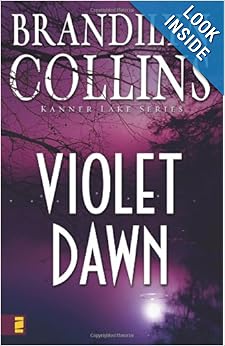 Another author I admire is Brandilyn Collins. The one thing I don't care for in Nevada Barr's work - the excessive amount of profanity - is one of the things I appreciate about Ms. Collins. She can tell a spine-tingling story without making every other word an expletive.
If you are looking for a fantastic book, I might recommend Violet Dawn or Dark Justice by Ms. Collins. Hopefully, I will have a lot more tips from her about writing gripping prose next month. I am attending the same writers guild meeting she will be at in February.
So if you're an aspiring writer, my advice would be to stop trying to make a plot happen. Treat it like a movie you're watching. Let the scenes unfold before your mind's eye. Then find the right words to capture what's going on. It might not work for anybody else, but for me, that's how it happens.
Monday, December 30, 2013
A Tip of the Hat to a Couple of Great Mystery Writers
The audience for The Ecuadorian Deception continues to grow, both in softback and Kindle edition. People living in South America especially seem to appreciate availability on Kindle since books in English are hard to come by and expensive there.
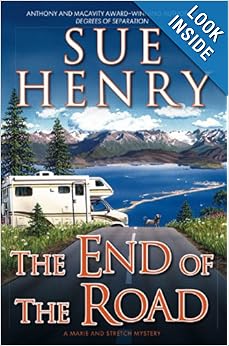
One of my motivations for writing this book, besides wanting to turn out a first-rate mystery, was to acquaint people with two incredible cities, Guayaquil and Cuenca. Over the years I have particularly enjoyed writers who took their audience on a grand tour of real places with a rip-roaring cast of characters.
Sue Henry is particularly known for what I call Travel Mysteries. Her heroine Maxie and faithful traveling companion Stretch the weenie dog travel around the US on adventures that leave you with a pretty good understanding of the places the story happens, as well.
My suspicion is that Ms. Henry, who originally made her reputation writing mysteries/detective novels set in her native Alaska, got the traveling jones. As she traveled about the nation, so did her alter ego Maxie.
Good for her. Better for us.
When my wife and I traveled to the Big Island of Hawaii a few years ago, Henry's book The Refuge served as an education about the history of the island's cultures, as well as introducing us to the best places to visit. It's really fun to stand in the very place an author stood when he or she was creating a yarn.
Another talented mystery writer who also provides a great travelogue for the open road is Nevada Barr. Now, let me provide this disclaimer: I don't believe you have to have foul language to have a gritty story. In fact, I'm of the Humphrey Bogart school of thought. Nobody ever said The Maltese Falcon wasn't a gritty movie, but it didn't lean on the crutch of profanity to get it there.
I very much wish Ms. Barr was less reliant on profanity. Having said that, credit where credit is due. She writes some of the most spine-tingling edge-of-your-seat material you could ever want to read. In addition, each of the stories happens in one of our national parks.
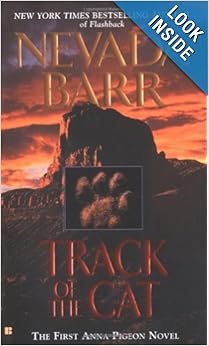
Ms. Barr is/was in a unique position to use these settings. She is a former park ranger. Her first novel, Track of the Cat, was set in Guadalupe Mountains National Park in West Texas. My favorite, Borderline, is set in Big Bend.
While traveling to the places where these mysteries is set adds to the adventure, I don't recommend reading her mystery Hard Truth while visiting Rocky Mountain National Park outside Estes Park, Colorado. The book involves the hunt for a psychopath who has stolen children and is using them for his gratification while murdering anyone who gets in his way.
That's probably not the kind of unsettling image you want while sitting beside the tranquil waters of Bear Lake or enjoying an autumn day among the aspens.
If you've got a favorite author who also takes you on the road for adventures, I'd love to know about him or her. Please comment below. Until then, enjoy these two masters of mystery. Oh, and don't forget to read the new novel from that up-and-comer Bear Mills. I'm working to build a fan base and would love you have you in on the ground floor.
Wednesday, December 18, 2013
15 Things You Need to Know About Cuenca and Guayaquil
Thousands, perhaps tens of thousands, of people are moving from the US and Canada to Ecuador each year. Good for them. Perhaps you are one of them. Good for you. Magazines, websites, travel channels, and financial advisors focusing on retirees seem to be having a love affair with Ecuador.
As well they should. But if you are thinking about relocating to South America, here's 15 things to take into consideration:
1. Ecuador is not the southern edition of the United States. It's not even North America. It is a foreign country with it's own language, customs, and traditions. When you arrive, you will be a visitor. A guest.
We Americans have become accustomed to the idea that every place is just like the US, and if it's not, it ought to be. Not so. I had someone just this week say they were planning on moving to Ecuador from Texas. I asked them if they had considered moving to New Mexico and they, with a straight face, said, "I wouldn't ever move to New Mexico. Too many poor people and too many Mexicans. It's amazing how few people there speak English." But they are planning to move to Ecuador? If they are trying to get away from Mexicans, that will probably work. As for the rest of it...
2. If you want warm, move to Guayaquil. If you want (very) rainy and cool, move to Cuenca. Quito, I can't comment on, having not yet visited there.
 3. Cuenca has some of the most beautiful cut flowers in the world. A great daily routine would be visiting the flower ladies in city central each day and keeping a little heaven in a vase on your dining room table.
4. Spanish is the official language of Ecuador. The people are very tolerant of those trying to learn Spanish. Take lessons. If someone visited your house and expected you to learn their language so you could have the privilege of conversing with them, you'd be a little put off. If you don't want to speak Spanish, why are you moving to a Spanish speaking country?
5. Yes, the American dollar is the official currency of Ecuador. However, there is a shortage of small bills and one dollar coins. If you bring big bills ($20s and $50s) you will probably have a very difficult time getting them broken. We stood for almost an hour at a grocery store one day waiting for them to round up enough change to break our $20 for a five or six dollar purchase.
6. If your Spanish is questionable, write down your address on a card and keep it in your wallet. That way you can show it to the cabbie and he will know where to let you out. Even if your Spanish is fair to good, the stress and strain of moving to a new continent, the tiredness you will feel your first few weeks, and the general excitment of it all, may cause you to suddenly blank out on your address. (Not that I'd know about that from first hand experience or anything...) Further, you need to know more than your house number. You MUST know the nearest intersection to your house. That's how people find things. Even experienced cabbies want intersections instead of house numbers.
7. Speaking of cards, if you are one of those who relies heavily on 3X5 and 4X6 cards to make notes and keep yourself organized, you better bring some with you. These little jewels are unheard of in any of the stores we visited. (How in the world do the students study without 3X5 cards???)
8. Cuenca and Guayaquil have a maginificent array of tropical plants and flowers. Keep your camera with you at all times.
9. Once you are settled in, get out and explore! There are very resonably priced day trips from Cuenca and Guayaquil to some of the most amazing places on earth. Go see them. You have traveled too far to sit at home. Go see the Cajas, Ingapirka, etc., etc., etc.
10. If you love to fish, you will love this area. The trout are everywhere and they are an envasive species, killing out the native fish. Hence, the local fish and wildlife people would love for you to take home as many as you can eat and then come back tomorrow for more.
11. You will be in for a shock the first time you walk into a grocery store. The eggs and milk aren't refrigerated. My daughter the animal science major informs me this is no big deal. It will take some getting used to. (More on this in another blog.)
12. Speaking of shocks, we couldn't find any canned soup in all of Cuenca. People make it from scratch. If you are looking for an easy dinner with a can of Campbells or Progresso on a chilly Cuenca evening, good luck.
13. Fortunately, the markets sell an amazing array of vegetables, so plan ahead and make your soup from scratch.
 14. Most of the houses in Cuenca don't come with heaters. If you are cold natured, you will need to pack plenty of layered clothing and plan on buying space heaters when you arrive. On a related note, the stoves and ovens work on gas, but not the way you're thinking. They use bottles of propane and you have to buy it from a guy who comes by every few weeks. Go with it. It works for them. It will work for you.
15. Cuenca and Guayaquil were ancient cities before the US of A was even thought about. Take the time to learn the history of these amazing places.
Bonus: My novel, The Ecuadorian Deception, is set in Cuenca and Guayaquil. I wrote it with you in mind. You can enjoy a first-rate story (if I do say so myself) while learning more about this area. If you've ever read Nevada Barr's murder mysteries set in national parks or the mysteries of Sue Henry (in which her alter ego travels around America in a Minnie Winnie and solves crimes), you know what we're doing here.
Other things people need to know?
Questions you have about Cuenca or Guayaquil?
I'd love to hear from you.
As well they should. But if you are thinking about relocating to South America, here's 15 things to take into consideration:
1. Ecuador is not the southern edition of the United States. It's not even North America. It is a foreign country with it's own language, customs, and traditions. When you arrive, you will be a visitor. A guest.
We Americans have become accustomed to the idea that every place is just like the US, and if it's not, it ought to be. Not so. I had someone just this week say they were planning on moving to Ecuador from Texas. I asked them if they had considered moving to New Mexico and they, with a straight face, said, "I wouldn't ever move to New Mexico. Too many poor people and too many Mexicans. It's amazing how few people there speak English." But they are planning to move to Ecuador? If they are trying to get away from Mexicans, that will probably work. As for the rest of it...
2. If you want warm, move to Guayaquil. If you want (very) rainy and cool, move to Cuenca. Quito, I can't comment on, having not yet visited there.

4. Spanish is the official language of Ecuador. The people are very tolerant of those trying to learn Spanish. Take lessons. If someone visited your house and expected you to learn their language so you could have the privilege of conversing with them, you'd be a little put off. If you don't want to speak Spanish, why are you moving to a Spanish speaking country?
5. Yes, the American dollar is the official currency of Ecuador. However, there is a shortage of small bills and one dollar coins. If you bring big bills ($20s and $50s) you will probably have a very difficult time getting them broken. We stood for almost an hour at a grocery store one day waiting for them to round up enough change to break our $20 for a five or six dollar purchase.
6. If your Spanish is questionable, write down your address on a card and keep it in your wallet. That way you can show it to the cabbie and he will know where to let you out. Even if your Spanish is fair to good, the stress and strain of moving to a new continent, the tiredness you will feel your first few weeks, and the general excitment of it all, may cause you to suddenly blank out on your address. (Not that I'd know about that from first hand experience or anything...) Further, you need to know more than your house number. You MUST know the nearest intersection to your house. That's how people find things. Even experienced cabbies want intersections instead of house numbers.
7. Speaking of cards, if you are one of those who relies heavily on 3X5 and 4X6 cards to make notes and keep yourself organized, you better bring some with you. These little jewels are unheard of in any of the stores we visited. (How in the world do the students study without 3X5 cards???)
8. Cuenca and Guayaquil have a maginificent array of tropical plants and flowers. Keep your camera with you at all times.
9. Once you are settled in, get out and explore! There are very resonably priced day trips from Cuenca and Guayaquil to some of the most amazing places on earth. Go see them. You have traveled too far to sit at home. Go see the Cajas, Ingapirka, etc., etc., etc.
10. If you love to fish, you will love this area. The trout are everywhere and they are an envasive species, killing out the native fish. Hence, the local fish and wildlife people would love for you to take home as many as you can eat and then come back tomorrow for more.
11. You will be in for a shock the first time you walk into a grocery store. The eggs and milk aren't refrigerated. My daughter the animal science major informs me this is no big deal. It will take some getting used to. (More on this in another blog.)
12. Speaking of shocks, we couldn't find any canned soup in all of Cuenca. People make it from scratch. If you are looking for an easy dinner with a can of Campbells or Progresso on a chilly Cuenca evening, good luck.
13. Fortunately, the markets sell an amazing array of vegetables, so plan ahead and make your soup from scratch.
 14. Most of the houses in Cuenca don't come with heaters. If you are cold natured, you will need to pack plenty of layered clothing and plan on buying space heaters when you arrive. On a related note, the stoves and ovens work on gas, but not the way you're thinking. They use bottles of propane and you have to buy it from a guy who comes by every few weeks. Go with it. It works for them. It will work for you.
15. Cuenca and Guayaquil were ancient cities before the US of A was even thought about. Take the time to learn the history of these amazing places.
Bonus: My novel, The Ecuadorian Deception, is set in Cuenca and Guayaquil. I wrote it with you in mind. You can enjoy a first-rate story (if I do say so myself) while learning more about this area. If you've ever read Nevada Barr's murder mysteries set in national parks or the mysteries of Sue Henry (in which her alter ego travels around America in a Minnie Winnie and solves crimes), you know what we're doing here.
Other things people need to know?
Questions you have about Cuenca or Guayaquil?
I'd love to hear from you.
Tuesday, December 17, 2013
A Word About Thomas Crapper's Adventures in Ecuador
As you no doubt know, it was English plumber Thomas Crapper who, in the late 19th Century, popularized the flush toilet. His contribution to civilization is immortalized each and every time someone says they are going to the crapper or exclaim, "Crap!"
Because England is a long way from Ecuador, Mr. Crapper and his marvelous contributions were slow getting to Latin America. In fact, at one point in Ecuador's history, international ships refused to dock in Guayaquil because the smells from improperly contained human waste were so foul. As recently as September of 2013, the World Bank was still making loans in the millions of dollars to provide the most rudimentary sanitation systems in the poorer parts of that city.
While there are flush toilets in all the parts of Cuenca or Guayaquil you are likely to visit as a tourist or expat, that doesn't mean you're going to have an All-American experience in the privy.
For example, you will notice that virtually all the restrooms you visit have a large trash can sitting right beside the toilet. Don't look in it. You won't like what you see. You may even call out to the ghost of Thomas Crapper when you do. Or even to the ghost of Nathaniel Shitzinger (whoever he is).
If you decide to move to Cuenca, you will want to station one of those trash cans next to your toilet and make good use of it for the waste that comes with each wipe. The fact is, the sewer lines in most of the city are simply not big enough to handle paper waste. They are barely big enough to handle the solid waste from humans, much less the paper that accompanies it.
We learned this the hard way. No one wanted to bring up this rather delicate subject, especially when they were trying to convince us what a wonderful place Ecuador was to relocate. Therefore, we had the plumber out numerous times during our first few days because the toilet kept backing up.
You may think you are pretty good at Spanish, but you'll find out for sure when the plumber is trying to explain to you, in the most kind way he can and using very indirect language, why your plumbing lines are completely clogged.
Ecuador is a great place. But it isn't the United States of America. This is one example of the lack of infrastructure that comes with a lack of taxes. Of course, it's not a deal breaker. But if the idea of keeping used toilet paper sitting in a recepticle next to your sink grosses you out, you might want to think twice.
Quite frankly, no one we've met thinks it's that big a deal. Nor did we (once we got used to it). It also explained to us why many people from Latin America have the rather interesting habit of not putting their used toilet paper in the toilet in public restrooms back in Texas. (This is not strictly an Ecuador problem. Lots of developing nations have the same issues.)
I'm told some of the newer areas of Cuenca actually have plumbing lines big enough to handle the crap and the wrap, too, but I haven't seen any. Nor do most people want to take the chance of a major spill to find out.
If you do live in a part of Ecuador where narrow plumbing lines aren't an issue, let us know. You will make your neighborhood very popular and greatly up the value of the rentals there.
Until next time, happy crapping!
Because England is a long way from Ecuador, Mr. Crapper and his marvelous contributions were slow getting to Latin America. In fact, at one point in Ecuador's history, international ships refused to dock in Guayaquil because the smells from improperly contained human waste were so foul. As recently as September of 2013, the World Bank was still making loans in the millions of dollars to provide the most rudimentary sanitation systems in the poorer parts of that city.
 |
| A very helpful sign in the restroom of a restaurant frequented by Gringos in Cuenca. |
While there are flush toilets in all the parts of Cuenca or Guayaquil you are likely to visit as a tourist or expat, that doesn't mean you're going to have an All-American experience in the privy.
For example, you will notice that virtually all the restrooms you visit have a large trash can sitting right beside the toilet. Don't look in it. You won't like what you see. You may even call out to the ghost of Thomas Crapper when you do. Or even to the ghost of Nathaniel Shitzinger (whoever he is).
If you decide to move to Cuenca, you will want to station one of those trash cans next to your toilet and make good use of it for the waste that comes with each wipe. The fact is, the sewer lines in most of the city are simply not big enough to handle paper waste. They are barely big enough to handle the solid waste from humans, much less the paper that accompanies it.
We learned this the hard way. No one wanted to bring up this rather delicate subject, especially when they were trying to convince us what a wonderful place Ecuador was to relocate. Therefore, we had the plumber out numerous times during our first few days because the toilet kept backing up.
You may think you are pretty good at Spanish, but you'll find out for sure when the plumber is trying to explain to you, in the most kind way he can and using very indirect language, why your plumbing lines are completely clogged.
Ecuador is a great place. But it isn't the United States of America. This is one example of the lack of infrastructure that comes with a lack of taxes. Of course, it's not a deal breaker. But if the idea of keeping used toilet paper sitting in a recepticle next to your sink grosses you out, you might want to think twice.
Quite frankly, no one we've met thinks it's that big a deal. Nor did we (once we got used to it). It also explained to us why many people from Latin America have the rather interesting habit of not putting their used toilet paper in the toilet in public restrooms back in Texas. (This is not strictly an Ecuador problem. Lots of developing nations have the same issues.)
I'm told some of the newer areas of Cuenca actually have plumbing lines big enough to handle the crap and the wrap, too, but I haven't seen any. Nor do most people want to take the chance of a major spill to find out.
If you do live in a part of Ecuador where narrow plumbing lines aren't an issue, let us know. You will make your neighborhood very popular and greatly up the value of the rentals there.
Until next time, happy crapping!
Tuesday, December 10, 2013
Playing Post Office in Ecuador
One of the things people love about Ecuador is that it reminds them of the United States a few generations ago. For the most part, people leave you alone. The cost of living is generally much less than the States, there seems to be far less commercialism, and the feeling is far more rural, even in big cities.
As a matter of principle, many Americans are choosing Ecuador because they want to be as far as possible from a government they believe cannot keep its hands out of their pockets. But one of the trade-offs for this lack of taxation is a lack of infrastructure. All those tax dollars back in the US are used for things like highways, schools, public service employees, etc. And post offices.
The postal service in the US is far from perfect and getting unperfecter all the time. But at least there is one. Want to pay a bill, send snail mail to Aunt Gertie, or get a package from Amazon? The post office has your back.
If you are moving to Ecuador, one of the first things you must get used to is a lack of any sort of home postal delivery. None. Nunca. When it's time for you to get your bills, the company sending them uses delivery boys to stick the bills into the fence surrounding your dwelling. You want to pay the bill? Travel to the applicable offices (banks handle a lot of this) and pay it.
Many of us don't think twice about the United States Postal Service. It's like air. You don't miss it until it's not there. Of course, there are services that purport to make it easier for you to get around this. Bryan and Dena Haines have written an excellent blog on one of them, and the problems you can encounter. http://www.gringosabroad.com/club-correos-avoid-problems/
Like any other issue when relocating to another country, this isn't a deal-breaker, but it does take adjustment. If you are used to ordering things from Amazon and having them delivered, I hope it's books and you can receive them on your Kindle.
Speaking of reading material, another thing Ecuador lacks is greeting cards. We set out one day to find my mother-in-law a birthday card. I'm not sure we visited every single stationary store in Cuenca, but we had to come pretty close. After several hours, we found a business with a few cards thrown in a dusty bin in the back of the store room.
People in Ecuador celebrate birthdays the old-fashioned way...they go see each other. But without a birthday card.
So when people tell you that life in Ecuador is like stepping back in time, they are telling you the truth...the time before home delivery of mail. A lot of people actually like that, and you may, too. Imagine a world of no junk mail. Sounds like a little slice of heaven, yes?
But you do need to become proficient at paying bills online or finding where to pay them in person. That means getting out and seeing the city, practicing your Spanish, and remembering whether a la dereche means turn right or turn left at the next street to find your destination.
For those of you who already live in Ecuador, how have you adjusted to life without mail delivery? Any pieces of advice? For those planning to move, any questions we can help get answered? We'd love to hear from you. Just don't send it via snail mail...
As a matter of principle, many Americans are choosing Ecuador because they want to be as far as possible from a government they believe cannot keep its hands out of their pockets. But one of the trade-offs for this lack of taxation is a lack of infrastructure. All those tax dollars back in the US are used for things like highways, schools, public service employees, etc. And post offices.
The postal service in the US is far from perfect and getting unperfecter all the time. But at least there is one. Want to pay a bill, send snail mail to Aunt Gertie, or get a package from Amazon? The post office has your back.
If you are moving to Ecuador, one of the first things you must get used to is a lack of any sort of home postal delivery. None. Nunca. When it's time for you to get your bills, the company sending them uses delivery boys to stick the bills into the fence surrounding your dwelling. You want to pay the bill? Travel to the applicable offices (banks handle a lot of this) and pay it.
 |
| Moving to Ecuador? One adjustment is no mail delivery. Bills are brought by delivery boys and placed in your fence. |
Like any other issue when relocating to another country, this isn't a deal-breaker, but it does take adjustment. If you are used to ordering things from Amazon and having them delivered, I hope it's books and you can receive them on your Kindle.
Speaking of reading material, another thing Ecuador lacks is greeting cards. We set out one day to find my mother-in-law a birthday card. I'm not sure we visited every single stationary store in Cuenca, but we had to come pretty close. After several hours, we found a business with a few cards thrown in a dusty bin in the back of the store room.
People in Ecuador celebrate birthdays the old-fashioned way...they go see each other. But without a birthday card.
So when people tell you that life in Ecuador is like stepping back in time, they are telling you the truth...the time before home delivery of mail. A lot of people actually like that, and you may, too. Imagine a world of no junk mail. Sounds like a little slice of heaven, yes?
But you do need to become proficient at paying bills online or finding where to pay them in person. That means getting out and seeing the city, practicing your Spanish, and remembering whether a la dereche means turn right or turn left at the next street to find your destination.
For those of you who already live in Ecuador, how have you adjusted to life without mail delivery? Any pieces of advice? For those planning to move, any questions we can help get answered? We'd love to hear from you. Just don't send it via snail mail...
Subscribe to:
Posts (Atom)