Posts


 Irene Hannon is a bestselling author in two genres. She
describes her novels as “edge-of-the-seat suspense or tender, heartwarming
romance without gratuitous violence, explicit love scenes or vulgar language.”
However they are described, the fact is that her books appeal to both readers
and critics alike. She has won the Romance Writers of America’s top award for
inspirational novels twice and been nominated for the honor four more times, She’s
also won the Reader’s Choice Award (for "Fatal Judgement") and Retailers Choice Award (for "Deadly Pursuit") for her suspense
novels. It’s a real privilege to spend a few minutes with this talented author.
 Irene, tell me
about your decision to not include gratuitous violence or language in your
books.
How has that
helped your sales? Conversely, how has it hurt?
I think excluding those elements has helped rather than hurt my
sales. I've had so many readers write to say it was refreshing to find a
compelling novel they could share with a daughter or mother or grandmother
without having to worry about R-rated content.
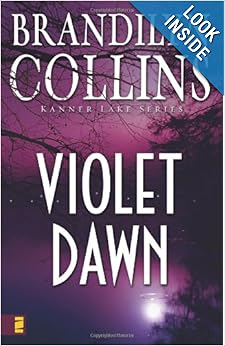
You and Brandilyn
Collins are two well-known authors who have given us both mystery/suspense
novels and romances. Janet Evanovich is probably the most famous author to move
between the two genres. What was the thinking behind going from one genre to
another?
In the beginning, I only wrote contemporary romance because the
research required for suspense novels overwhelmed me. I had no contacts in law
enforcement or the military, and there was no internet. (Yes, this was back in the
dark ages!) Once I had the research tools and contacts I needed, I expanded my
repertoire to include suspense. I enjoy both genres, and moving back and forth
between them gives me variety. Also…no matter the genre, what intrigues me most with any book are the people
on the pages. I love trying to understand the forces that shaped the
characters and the choices they make, even when I don’t agree with those
choices. And I enjoy taking readers along on that journey. The genre I choose is simply a
vehicle for delving into the minds and hearts of my characters as I put them in
some very challenging situations and watch how they respond.
How have changes
in the publishing industry affected your books and the way you publish and
market them?
While the world of self-publishing has exploded in recent years, I
still publish traditionally—that is, with an established publishing company. They
take care of the publishing and the vast majority of the marketing for my books.
However, in this digital age, authors are expected to establish a social media
presence, so I have a website, and I’m active on Facebook and Twitter.
You left the
corporate world to be a writer. Talk about that transition.
The transition was easy; the decision to make it wasn't. For most of my years in the corporate world, I juggled both my writing and corporate careers. However, as I
rose in the ranks at my company I had less and less time or energy for my
fiction writing. I finally reached the point where the day job became 24/7 and I
knew I had to give up one of my careers. It was a tough decision in many ways,
because I truly had a dream job—the kind one of my suspense-novel villains
would kill for! Yet as I was struggled with that choice, several things
happened that convinced me it was time to focus on fiction. It wasn't exactly writing
in the sky…but very close. And I've never had a single regret about walking
away. As for the transition—I enjoy being by myself, love having the
flexibility to arrange my working hours to suit me, and am so grateful on snowy
mornings like today that I have a ten-step commute to my office!
The honors you've earned for your books is so long, I can’t even begin to list them here. Suffice
to say, you epitomize a successful author. When you speak to would-be authors,
what advice do you give them?
Learn the craft. Write, rewrite, and rewrite some more. Develop a
thick skin. Listen to constructive criticism. Don’t expect to be an overnight
success. Build writing into your routine—don’t wait for inspiration to strike.
Professional writers write whether they’re in the mood or not. And don’t give
up your day job until you have a long track record of success and a nice nest
egg put aside. Believe in your dream. And enjoy the journey.

If people are
just becoming familiar with your books, which suspense and which romance would
you suggest they start with?
It depends on individual taste. There are many readers who enjoy
all my books, and some who prefer one genre over the other. If you’re a Karen
Kingsbury or Debbie Macomber fan, I’d say start with the romance. Hope
Harbor, a story set in a charming fictional town on the Oregon coast,
will be out in July. If you like a Nora Roberts-type romantic suspense novel,
go for the suspense. My style is very similar to hers—without the sex and
vulgarity. Buried Secrets is about to hit store shelves.
In addition to
being an author, you also enjoy singing and have done some stage acting. Any
desire to make the leap to TV? (Erle Stanley Gardner actually appeared as a
judge in several episodes of the Perry Mason TV show…any fantasies about being
a character in the dramatization of one of your series?)
I would love to have one—or more—of my books made into a movie or
TV show. And yes, it would be great fun to play a role! I don’t have much film
experience, but I've done lots of performing in community musical theater.
I read an
interview in which you had some interesting comments about the Christian
Fiction genre. Just the term “Christian Fiction” makes some people
snicker and others roll their eyes. Can you revisit your comments.
Sad to say, there’s a certain stigma attached to Christian fiction
in some circles. Many people who've never read a book in the genre assume the
novels are preachy and contain heavy-handed faith content. I wish there was
some way to overcome this stereotype. Most of the Christian fiction novels I've read are wonderful, well-written, engaging stories that do very little overt
preaching. I think anyone who enjoys a good, “clean” novel would discover many
gems in the Christian fiction section of the local bookstore.
First For Women
magazine just carried a very glowing review of your most recent novel, Deceived. Talk about the marketing
involved in getting national attention for your work.
That placement was amazing. The magazine reaches more than four
million readers! But I can’t claim any credit for it. The publicist at my
publishing house got the book into the right hands, and they chose to feature
it. That’s one of the advantages of going with a traditional publisher. They
have contacts the average author doesn't.
When you write,
are you writing for yourself or is there a particular reader to whom you are
directing your work?
 I’m cognizant of readers as I write, and I do read—and listen to—the
constructive criticism they send. But in the end, I write the stories that
interest me. For example, Amish fiction is big now. So are young-adult
dystopian books. Historical fiction has a large fan base, too. None of those appeal
to me as a writer. Even within the suspense genre, there are certain things I
avoid. Some writers like to pen thrillers, where worlds are at stake and
buildings blow up on every other page. Others infuse their books with an
adventure vibe. Again, not my style. In fact, I do something most writers in my
genre avoid. I reveal the villain very near the beginning of the book. That’s
why my books are classified as suspense versus mystery. I take readers inside
the villain’s head—which can be a very scary place!—and let them see what he or
she is planning. Readers then know more than the hero and heroine, which ratchets
up the expense. The books are about whether or not the hero and heroine can
stop the villain from carrying out his or her nefarious plan rather than
whodunit.
I've been asked a question that I’d like to also ask you: When you
create a particularly nasty villain, have you ever been asked, “Where did that
person come from? How long have they been living inside you?”
No one’s ever asked me this. I have no idea where the truly nasty
villains come from. They don’t live inside me, that’s for sure! I’d walk a wide
circle around most of them. They just appear and take on a life of their own. I
observe them, listen in on their internal thinking, and write their story.
When you are not
writing, who do you enjoy reading? Are there any performers/musicians to whom
you’d like to give props for energizing/entertaining you between projects?
I read eclectically. Fiction, with rare exception. And I read many
different authors. For pure relaxation, I enjoy contemporary romance or
coming-of-age stories. I don’t read many suspense novels for fun, especially
when I’m writing in that genre, as I find them too intense after a full day of
living in that high-stakes world. As for musicians/performers…I work in
silence, so no music is playing while I write. I love to sing, so I tend to do
that rather than listen to music when I have spare time. I do like mellow jazz,
like Stan Getz, for relaxing during dinner. I also watch very little TV. I’d
rather take a walk or read a good book or visit with family or friends.
When it comes to
“Christian” writing, do you see that more as what is left out of a book or what
is put into it?
Neither. For me, it’s simply a worldview that underscores what I
write. It’s organic to the story; a subtle element that guides what goes on the
page and how characters react. It’s not something I consciously think about as
I write. My books have been classified as Christian fiction, but I consider
myself more a Christian writer than a writer of Christian fiction.
For more information on Irene, visit her website, http://www.irenehannon.com/index.html. You can also sign up for her newsletter and follow her on Twitter or Facebook.