Monday, March 23, 2015

Planning a trip? Don't do it without Chris Christensen, aka The Amateur Traveler

Chris Christensen is one of America's top travel reporters. His podcasts, website, and videos feature the most interesting people and places in the world. I dare say it would be impossible for your Bucket List to not expand dramatically as you listen to and read his reports. 

by Jim Cords
Chris's iconic image, found on
the Amateur Traveler podcasts
The website, http://amateurtraveler.com/, is an incredibly handy site for perusing various destinations, deciding what you want to do once you get there, and choosing the best way to travel there and home again. If Chris hasn’t been there, he knows someone who has and will share their insights. It truly is a travel community.

One of the things I most appreciate about Chris’s interviews is that through his Dick-Cavettesque questioning style, you learn not only information about a place, but the biases of the interviewee. That can be invaluable, and you don’t get that from travel books.

The Amateur Traveler, his podcast, often includes the kind of information you usually don't find in tour books. Most importantly, his podcasts are completely entertaining. If you've never heard them, make a beeline for iTunes. The podcasts are free.

First, Chris, this interview is being conducted following an extended boat trip off the coast of South America. Tell us where you went and what you were doing there. I was on a cruise around Cape Horn from Buenos Aires to Santiago, Chile. I was sponsored by Holland America to take this cruise. We saw penguins in the Falklands, tango in Buenos Aires, and glaciers in the fjords of Chile.

IMG_3024
Mr. Christensen's Penguins,
photographed during his trip to South America
I believe your professional career was originally centered around Silicon Valley. How did you transition from that to being a professional travel writer? I actually still make my living from software, both my own start-up company (BloggerBridge.com) and part time contracting work for my old employer, TripAdvisor. I used to be their director of engineering for TripAdvisor Flights and SeatGuru. Travel writing and podcasting are my third job.

You call yourself and your website The Amateur Traveler, but I just referred to you a professional travel writer. That sounds like a contradiction, but I know it's not. Clarify that for us. When I chose the name Amateur Traveler, I had in mind “travel for the love of it.” Amateur meaning to do something for love. Remember you used to have to be an amateur to be an Olympic athlete, yet they were considered the best in the world. The ark was built by an amateur and the Titanic was built by professionals.

IMG_4396
Chris took this picture at the Great Wall
While people might think about travel writing as a fairly right-brained activity, what I see is that you approached this in a very left-brained way. Tell us about The Amateur Traveler as a business. I think I find the travel writing is right brained, creative; but being a travel blogger or podcaster also means that you are not just a writer, but a publisher, with all that implies. You need to sell ads if you are going to have them, set schedules, set and meet deadlines. Some parts of that I have done better than others. I am not the best salesperson for instance.

You have well over four hundred podcasts available through iTunes and on your website, www.amateurtraveler.com. Talk about what's involved in putting a show on the air. An episode of Amateur Traveler probably takes about eight to nine hours of production work starting with the interview, then editing the interview, adding in other elements, publishing, and publicizing. We also do "This Week in Travel" which takes less because we don’t edit that show. Fortunately, I hire an editor to take care of the editing of the audio, and also adding in the photos and links that we have in the iTunes enhanced version of the show. That takes 5 hours off my plate.

How do you select guests for your show? I find they are all extremely effective communicators. What's your audition process? I reach out to some people directly who I have heard speak, or ask the travel blogging community who would be a great guest for a specific destination. I also get unsolicited pitches (http://AmateurTraveler.com/pitch-me) for being on the show. You need to pitch a place, not a person. Sometimes the shows just don’t work. Not every interview gets aired.

IMG_5304
Chris as Yosemite
What are some of the highlights of your own travels? If you were putting together a "greatest hits" list of your adventures, what would make the cut? Some of the most memorable destinations would include Tanzania, Egypt, Istanbul, China, and Japan. Rafting down the Green River in Dinosaur National Park and blackwater rafting in New Zealand were some memorable adventures. The most unusual may have been working as a photo journalist for the day in Jordan covering a visit by the pope and the royal family (http://asia.amateurtraveler.com/day-papal-paparazzi/) or an invitation last December to the White House (http://amateurtraveler.com/white-house-wants-study-abroad/).

You've traveled all over the world. What locations are still on your bucket list? I have published a Bucket List (http://amateurtraveler.com/my-travel-bucket-list/) and am working through checking things off. I also use the UNESCO World Heritage list (http://amateurtraveler.com/unesco-world-heritage-sites/) and the list of U.S. National Parks as a bucket list.

A walk among the ruins
with Chris Christensen
How do you see your work as being unique from, say, travel books like Frommers or websites like Tripadvisor? I am a big fan of both Frommers -- I consider Pauline Frommer a friend -- and TripAdvisor. I sometimes describe an Amateur Traveler episode as an audio guidebook for a destination. We won’t provide all the information you will need to go there but we will help you decide if you want to go there.

In addition to writing about travel, you are also periodically leading travel groups. Tell us about that. We have not done that very often but in April we are having the second Amateur Traveler group trip (http://amateurtraveler.com/amateur-traveler-trip-morocco-april-2015/). We will be with a group of eleven people, or a few more if anyone is interested, counting my wife and I heading to Morocco. We did an Amateur Traveler photo tour of Egypt back in 2010, just before the Arab Spring. That trip was part of a larger group trip, so I am looking forward to a more intimate trip. I am working with a great tour company that is doing all the logistics.

The Amateur Traveler,
Chris Christensen
I believe I am correct in saying that you come from a Lutheran background. Your website also has links to some Bible study options. What is the connection, in your mind, between our physical journeys and our spiritual journey? Yes, in addition to three jobs and two travel podcasts, I also lead two bible studies a week. One is a podcast, The Bible Study Podcast (http://TheBibleStudyPodcast.com), and the other is in a lock-down unit for violent youth offenders in the local Juvenile Hall. I view all of life as a journey, only some of which comes with jet lag.

Tuesday, March 17, 2015

How do you spell suspense? B.R.A.N.D.I.L.Y.N. An interview with Brandilyn Collins

Brandilyn Collins is my favorite living author. Her sense of suspense is second to none. I was first introduced to her through the Kanner Lake Series. If you enjoy suspense, it doesn’t get any better.

However, there is another side to Brandilyn Collins that we need to address right off the bat.  Though she wasn't writing to my demographic, her two romance series, The Dearing Family and The Bradleyville novels are also extremely popular.

Brandilyn, I know books don’t always get published in the order in which they are written. Which came first, the romances or the suspense novels? How did you decide to move from one genre to the other? Actually, I don’t write romance. Those books are considered simply “contemporary” or “women’s fiction.” They have large romantic subplots, but the main plot centers on family relationships.

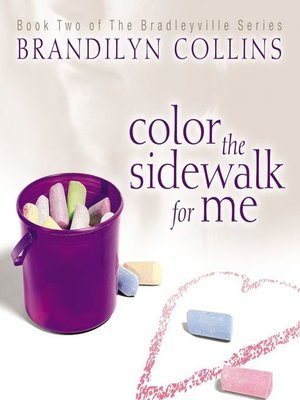
Having said that, my first novel was Eyes of Elisha, a suspense. My second (written) was Color the Sidewalk for Me, a contemporary. I had a huge learning curve to write Eyes Of Elisha, since it involves a lot of police work, forensics, and courtroom scenes. I’m not a lawyer, forensics person, or police officer, so I had to learn everything from the beginning. Plus, EOE came in the middle of writing a true crime, my first book to be published. (A Question of Innocence, my only book that’s now out of print.) The true crime took a lot out of me because it involved the death of a four-year-old. After writing that, and all the forensics research for EOE, I just couldn’t do another suspense. Since I was unpublished at the time I could write whatever I wanted. So I wrote Sidewalk. Later I wrote a prequel to Sidewalk, titled Cast A Road Before Me. Road was my first novel to be published, followed by EOE, then Sidewalk. The third contemporary novel in what came to be called the Bradleyville Series is Capture the Wind for Me. By the way, Cast A Road Before Me is free in ebook.
"You da man" "No, you da man."
Barndilyn Collins with fellow author
Ted Dekker on the 2010 Thriller tour.

What was the process that took you from being a person who wrote books to being a published author? The process? Lots of staying up all night, kicking cabinets, writing, writing, writing, and studying the craft. Oh yes, and ten years.
  
Discuss the first time you realized, “Hey, I’m a celebrity! People want my autograph.” Conversely, what are the downsides to celebrity? Wait, I’m a celebrity? Why didn’t anyone tell me this?

 Talk about the birthing process for your suspense novels. Lots of staring out windows. Lots of going down a maze run and retracing my steps. “Nope—that’s not the right path.” Far more “what if” premises run through my head than ever are actually written. My Seatbelt Suspense® brand promise has four points: fast-paced, character-driven suspense with myriad twists and an interwoven thread of faith. I've found it a very difficult brand promise to live up to. Some suspense plots simply couldn't start fast enough for my readers, who expect that fast pace to begin on page one. Some don’t bring about enough twists. So I pace and pray, and then sit down to write when I at least have the beginning and ending and the major twists figured out. The middle comes as I write. That’s the theory, anyway.

Honestly, writing is really hard for me. And with each book it seems to get harder. I have more “reputation” and reader expectations to live up to. I have to be fresh. And always, always, I want to represent the human condition in a true-to-life way, through well rounded characters caught in a compelling situation. Writing deep emotion takes a lot of energy. It can’t be skim-the-surface writing. I want my readers not just to read my scenes, but to feel them.

You live in Idaho and the Kanner Lake series is based in a small Idaho town. What was the reaction of your real-life neighbors when you brought fictional mayhem to a town not unlike the one you and they really live in? We had our second home in Idaho at that time, but we still lived in our main home in California. Now we live full time in our Idaho home. But even when we were in Idaho at the time that the Kanner Lake books were being released, people in the area loved that they were locally set. It’s fun to read a novel that takes place in a setting that is familiar to you. The reader can picture the streets and shops.

I’d love to do more Kanner Lake books, but the setting was, as you say, in a small town. And just how much mayhem big enough to receive national attention can you put one little town through? I do miss the characters, though. Methinks Wilbur is still sitting on his chair in Java Joint, crabbing about something and everything.

 There can be raised eyebrows when Christian authors create bad guys who are just a little too convincing. What kind of comments have there been from friends, church members, or family about some of the psychopaths who dot your literary landscape? What do you say when people ask, “How long has that person been living inside you?” What is your process for developing convincing baddies for your books? My mother always wondered where she went wrong. She also read all my books and loved them.

First, bad guys never think of themselves as bad guys. They have to do their bad thing, whatever it is, because of their own justification. Second, no character is all bad or all good. So I try to create a character with some good qualities, but who wants something VERY BADLY, and the only way to get that something is to do something VERY BAD. But it’s all okay, you see, because that person, in his mind, deserves to have whatever he wants.

Brandilyn meeting fans
Discuss how the publishing industry has changed in the years since you started writing. How has it altered the way you market and sell your books? After twenty-five books sold to publishers, I have now chosen to go completely indie (independent author), keeping the rights to my books and publishing them myself. This way I don’t sell my intellectual property, and I have full control over the release and content. For someone who’s as independent as I, this is way cool. (By the way, I have just gotten back the rights to my first two suspense novels—the Chelsea Adams Series: Eyes of Elisha and Dread Champion. I’m in the middle of doing a fresh edit for these books, so they’re currently not available online except for used paper copies. They’ll be up again soon.)

I know authors love all their “children,” but are there certain books you've written that have become your pets over the years? That’s always a hard question to answer. But I’d say Color the Sidewalk for Me remains probably my favorite book that I’ve written. Which is rather annoying, since it was only my second novel. (What is it—all downhill from there?) I got back the rights to the Bradleyville Series recently. All three novels have now been re-released. Before republishing them, I did a fresh edit. Reading Sidewalk fourteen years after it was first published, I am still greatly moved by that book. And reader letters about the story are terrific. (I have two fat files of letters and emails for Sidewalk alone.) Well, reader letters about all my books tend to be really positive. But when you get a letter from a man in his fifties who admits to reading a women’s fiction novel and bawling at the end—that’s a letter to remember. Of course he also added that if I ever attached his name to that statement he’d deny it.

That’s surprising you should say your favorite is Sidewalk, since it’s not a Seatbelt Suspense®, for which you’re best known. Yeah, I know. I’ve written a lot of high tension suspense novels, all of which I do really like. Now that they’re published, that is. When I’m in the midst of writing a book I always think it’s horrible and will be the one that will ruin my career forever. Over The Edge stands out to me, because the story line focuses on Lyme disease and the difficult issues of diagnosis and treatment. It’s another very suspenseful story. At the same time it contains a lot of information about Lyme. I've received incredible letters from readers about that book—how it’s helped save their lives.

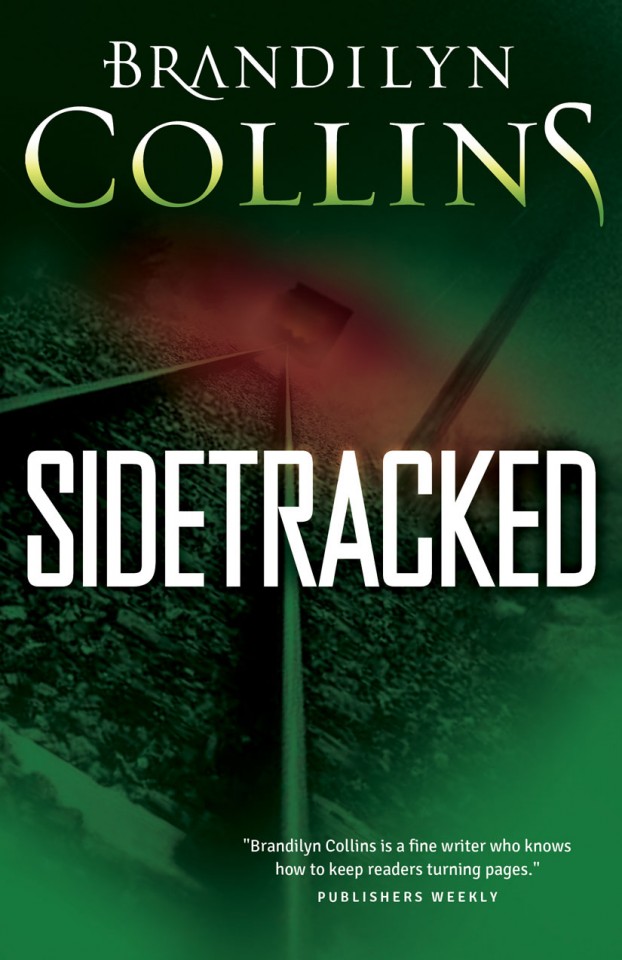
Sidetracked is my latest suspense and has proven very popular (over two hundred 5-star reviews on Amazon). Gone to Ground stands out to me because of the Southern characters and the eyebrow-raising premise. Dark Justice is about terrorism against the electrical grid—something that’s, unfortunately, all too feasible in today’s world. A lot of my books are finalists/winners in various awards, but that book holds the record at six. And you mentioned Kanner Lake. I do love the characters in that series also. The Hidden Faces series, featuring a forensic artist, are four of the scariest books I’ve written. I could go on, but then I’d be mentioning all my suspense novels.

Your book about the writing process stresses character development as being of supreme importance. Do you develop your characters first and then place them in a story or do you develop the plot line and then create characters to fit the necessities of the action? It HAS to be the former. That’s why the second point of my four-point brand promise says “character-driven.” Suspense is considered to be a plot-driven genre. But if you plot out a story and stick characters into it, they’ll be wooden. Character motivation drives choices. Those choices in turn drive further conflict. That’s why, when I begin to write a Seatbelt Suspense®, I know the beginning and ending, but not quite how I’ll get there. The characters grow as I write. They tell me how we’ll get there together. And if my planned ending doesn’t work for that character, I’ll learn that, too.

You mention on your website that in heaven, you shall spend all your time going from concert to concert. As a fellow music aficionado, share with me some of your favorite performers on this earthly realm. Rock bands. I’m a rocker from the 70s. Always have been, always will be. Well, since the 70s, anyway. Kansas. Boston. Journey. Foreigner. Styx. Little River Band, etc. Also I love gospel music. So yes, I shall run from gospel concert to rock concert. But the rock songs will have lyrics about God. Best combination ever.
Authors Frank Peretti and Randy Alcorn hamming it up at
Brandilyn's lakeside home in Idaho.

Speaking of musicians, Frank Peretti’s career moved into a whole different zip code when Amy Grant began talking about This Present Darkness a few years ago. Fantasize for a moment: Which performer would you like to see climb on the Brandilyn Collins bandwagon and which book would it be? Frank happens to live in my neck of the woods. It’s interesting to hear him tell that story. I don’t think I’d want a performer. I’d want someone in the news industry that’s highly watched. You wanna tip one or two of them off about me-that would be great.

Note: Read the first chapters of all Brandilyn’s books at her website. You can follow her on Facebook and Twitter.

Sunday, March 8, 2015

Author John C. Dalglish shares more than a name with P.D. James's famous detective

It's funny what draws us to a particular author or book. I was drawn to mystery/suspense author John C. Dalglish because his surname reminded me of P.D. James's great detective, Adam Dalgliesh. Yes, they're spelled differently. Like I said, these connections are funny.

What I found in Dalglish is a kindred spirit; a man who believes riveting suspense and killer action isn't defined by the amount of sex, gore, or profanity laced within its pages. Rather, it's the intricacy of the plot, attraction to the characters, and the amount of adrenaline pulsing through your veins as you turn the pages. 

Book ten of the Det. Strong series is now in print, proving he's found a winning formula that keeps bringing readers back for more. He also has a new "Chaser" series. Both are available through a variety of outlets, including Amazon and Kindle.
John C. Dalglish and friend

Tell us about Det. Jason Strong. The name is very evocative. What do readers need to know about this character?
The name for the character Jason came about as most of my names do; made up on the spot. What I think is interesting is that Jason was just a character to fill a roll, and was never meant to be a series. I tell people that I met Jason at the same time they did, when he walked onto the page. It wasn't until I was near the end of the book that I mentioned to some co-workers how much I liked the character. I decided to make a series out of him if the first book was well received.

We've heard other authors say they spent their entire lives writing their first book, but only got a few months to write all the ones after that. How has writing gotten easier or harder over the years?
I was discussing this with my wife this morning. I feel very fortunate that the stories come out of my head and onto the page in a fashion that I'm happy with. I rarely scrap large sections of a book. Obviously, there is much editing and tweaking, but the basics come out fairly organized. As far as easier-versus-harder, I can only speak for myself; it becomes harder to put out a good book, simply because you learn more about what a well-written book is, and how to do it. To write properly is hard, but more satisfying as you hopefully see yourself improve.

Take us behind the scenes regarding your writing process. Do you create an outline, start with characters and let the book write itself, or...?
I am very much an outline guy. I will begin with my basic premise, and write a series of scenes as bullet points. Things like- 'Jason goes to victims house', Vanessa goes to crime lab'- then start at the top. New ideas and scenes are added or subtracted by the story as it develops, but I continue to write in order. The most fun in the writing experience for me is watching what happens as I write the scenes. Details, conversations, action; they all come as I write and it's very exciting for me. (Hopefully, for the reader, too.)

You were born in Canada, but became an American citizen in 1991. How do you think your cross-cultural experiences have affected your writing?
I'm not sure the cultural differences have made much difference. Having said that, the fact that I have traveled in both countries, has given me a wider array of description possibilities.  My own feeling is that the life experiences, which give a writer something to draw on when he looks at emotions and reactions, are more important.

When people look you up on Amazon, they will see that you identify your books as "clean suspense." Tell me what you mean by that and why that's important to you.
Well, let's see; that's kind of a long story, but let me shorten it some. The first published draft of "Where's My Son?" had two or three swear words, and a little more descriptive violence than I would have preferred. I felt I needed them for realism. However, when I wrote "Bloodstain", I found I just preferred to leave it out. Following the publishing of the first two books, I received many letters thanking me for not using excessive language and sex. I discussed it with my wife, and made the decision to write 'clean' books. We reasoned that some of the top selling movies and books in the world were done by Disney, and there had to be a group of people that felt like we did. As a result, I went back and edited the first book and have been writing in that fashion ever since.

 How do you think the decision to not include gratuitous violence or sex has either helped or hurt your sales?
Without question, it has been a good decision. I have a police officer friend who I spoke to about this. I asked him if every third word from a cop was a cuss word. He laughed. "Hardly, that they were normal folks with normal feelings". He didn't say they don't swear, just that it doesn't occur at the level portrayed in movies. I still, ten books in, get letters thanking me for books that are 'clean'. They are the type I would read and I'm glad others do, too.

 You share surnames with one of my favorite characters of all time, Inspector Dalgliesh from the P.D. James novels. Ms. James has had a huge influence on my writing, as have Brandilyn Collins, Frank Peretti, and Sue Henry. Who are some of the writers who have most influenced your work?
Peretti is a good one, I enjoy his books a lot. Tom Clancy, and of all people, Erma Bombeck.  She taught me how to be funny in a book.

I asked you about Det. Jason Strong earlier, but you have another series that could probably be best described as "science (and faith) fiction." What is the Chaser Series?
I had a desire to do a pure Christian series, and the concept came to me as a takeoff on Touched By An Angel. What events could I create in a life after death scenario? I pitched the idea to my son, who is a fantasy author, and he liked it.

One of your books that has grabbed my attention and never let go deals with brothers Donnie and Billy Jarvis. Tell us about those characters and how you came up with the book "For My Brother" in which they appear.
You know, I'm not sure where the exact idea came from. My wife and I love the real life crime shows, and a lot of my basic ideas come from what bubbles up while watching them. The relationships in that book stem from events in my own life, and how events impact people's futures.

 Finally, do you consider yourself a Christian author or an author of books who is a Christian, if you catch the distinction. What do you think the secular market is like for those who refuse to play to the "Fifty Shades of Gray" and "Girl With the Dragon Tattoo" crowd?

First, as I think most believer's would say, I am a Christian. Everything I write, say, and do is shaped by that fact. So, I guess the latter statement would be true. As far as the "Fifty Shades" thing, I believe that Hollywood, Amazon, and anyone else in publishing, is willing to profit from a selling entity. I think the "Left Behind" series is a perfect example of that. Perhaps I'm naive, but I believe people want a good book, a story they get lost in, one that they feel sorry when it's over. I'm not sure the amount of sex or language determines that.

John C Dalglish's website is http://jcdalglish.webs.com/. You can find his author page at http://www.amazon.com/John-C.-Dalglish/e/B007LS4SV6