
 Posts
Posts


 Brandilyn
Collins is my favorite living author. Her sense of suspense is second to none. I was first introduced to her through the
Kanner Lake Series. If you enjoy suspense, it doesn’t get any better.
Brandilyn
Collins is my favorite living author. Her sense of suspense is second to none. I was first introduced to her through the
Kanner Lake Series. If you enjoy suspense, it doesn’t get any better.
However,
there is another side to Brandilyn Collins that we need to address right off
the bat. Though she wasn't writing to my demographic, her two romance series, The Dearing Family and The Bradleyville
novels are also extremely popular.
Brandilyn,
I know books don’t always get published in the order in which they are written.
Which came first, the romances or the suspense novels? How did you decide to
move from one genre to the other? Actually, I don’t write romance.
Those books are considered simply “contemporary” or “women’s fiction.” They
have large romantic subplots, but the main plot centers on family
relationships.
 Having said that, my first novel was
Eyes of Elisha, a suspense. My second
(written) was Color the Sidewalk for Me, a contemporary. I had a huge learning curve to write Eyes Of Elisha, since it involves a lot
of police work, forensics, and courtroom scenes. I’m not a lawyer, forensics
person, or police officer, so I had to learn everything from the beginning.
Plus, EOE came in the middle of
writing a true crime, my first book to be published. (A Question of Innocence, my only book that’s now out of print.) The
true crime took a lot out of me because it involved the death of a
four-year-old. After writing that, and all the forensics research for EOE, I just couldn’t do another
suspense. Since I was unpublished at the time I could write whatever I wanted. So
I wrote Sidewalk. Later I wrote a
prequel to Sidewalk, titled Cast A Road Before Me. Road was my first
novel to be published, followed by EOE,
then Sidewalk. The third contemporary
novel in what came to be called the Bradleyville Series is Capture the Wind for
Me.
By the way, Cast A Road Before Me is free in ebook.
Having said that, my first novel was
Eyes of Elisha, a suspense. My second
(written) was Color the Sidewalk for Me, a contemporary. I had a huge learning curve to write Eyes Of Elisha, since it involves a lot
of police work, forensics, and courtroom scenes. I’m not a lawyer, forensics
person, or police officer, so I had to learn everything from the beginning.
Plus, EOE came in the middle of
writing a true crime, my first book to be published. (A Question of Innocence, my only book that’s now out of print.) The
true crime took a lot out of me because it involved the death of a
four-year-old. After writing that, and all the forensics research for EOE, I just couldn’t do another
suspense. Since I was unpublished at the time I could write whatever I wanted. So
I wrote Sidewalk. Later I wrote a
prequel to Sidewalk, titled Cast A Road Before Me. Road was my first
novel to be published, followed by EOE,
then Sidewalk. The third contemporary
novel in what came to be called the Bradleyville Series is Capture the Wind for
Me.
By the way, Cast A Road Before Me is free in ebook. |
| "You da man" "No, you da man." Barndilyn Collins with fellow author Ted Dekker on the 2010 Thriller tour. |
What was
the process that took you from being a person who wrote books to being a
published author? The process? Lots of staying up all
night, kicking cabinets, writing, writing, writing, and studying the craft. Oh
yes, and ten years.
Discuss the
first time you realized, “Hey, I’m a celebrity! People want my autograph.”
Conversely, what are the downsides to celebrity? Wait, I’m a celebrity? Why didn’t anyone tell me this?
Talk about
the birthing process for your suspense novels. Lots of staring out windows. Lots of
going down a maze run and retracing my steps. “Nope—that’s not the right path.”
Far more “what if” premises run through my head than ever are actually written.
My Seatbelt Suspense® brand promise has four points: fast-paced, character-driven
suspense with myriad twists and an interwoven thread of faith. I've found it a
very difficult brand promise to live up to. Some suspense plots simply couldn't start fast enough for my readers, who expect that fast pace to begin on page
one. Some don’t bring about enough twists. So I pace and pray, and then sit
down to write when I at least have the beginning and ending and the major
twists figured out. The middle comes as I write. That’s the theory, anyway.
Honestly, writing is really hard for
me. And with each book it seems to get harder. I have more “reputation” and
reader expectations to live up to. I have to be fresh. And always, always, I
want to represent the human condition in a true-to-life way, through well
rounded characters caught in a compelling situation. Writing deep emotion takes
a lot of energy. It can’t be skim-the-surface writing. I want my readers not
just to read my scenes, but to feel them.
 You live in
Idaho and the Kanner Lake series is based in a small Idaho town. What was the
reaction of your real-life neighbors when you brought fictional mayhem to a
town not unlike the one you and they really live in? We had our second home in Idaho at
that time, but we still lived in our main home in California. Now we live full
time in our Idaho home. But even when we were in Idaho at the time that the Kanner Lake books were being
released, people in the area loved that they were locally set. It’s fun to read
a novel that takes place in a setting that is familiar to you. The reader can
picture the streets and shops.
You live in
Idaho and the Kanner Lake series is based in a small Idaho town. What was the
reaction of your real-life neighbors when you brought fictional mayhem to a
town not unlike the one you and they really live in? We had our second home in Idaho at
that time, but we still lived in our main home in California. Now we live full
time in our Idaho home. But even when we were in Idaho at the time that the Kanner Lake books were being
released, people in the area loved that they were locally set. It’s fun to read
a novel that takes place in a setting that is familiar to you. The reader can
picture the streets and shops.
I’d love to do more Kanner Lake
books, but the setting was, as you say, in a small town. And just how much
mayhem big enough to receive national attention can you put one little town
through? I do miss the characters, though. Methinks Wilbur is still sitting on
his chair in Java Joint, crabbing about something and everything.
There can
be raised eyebrows when Christian authors create bad guys who are just a little
too convincing. What kind of comments have there been from friends, church
members, or family about some of the psychopaths who dot your literary
landscape? What do you say when people ask, “How long has that person been
living inside you?” What is your process for developing convincing baddies for
your books? My mother always wondered where she
went wrong. She also read all my books and loved them.
First, bad guys never think of
themselves as bad guys. They have to
do their bad thing, whatever it is, because of their own justification. Second,
no character is all bad or all good. So I try to create a character with some
good qualities, but who wants something VERY BADLY, and the only way to get
that something is to do something VERY BAD. But it’s all okay, you see, because
that person, in his mind, deserves to have whatever he wants.
 |
| Brandilyn meeting fans |
Discuss how
the publishing industry has changed in the years since you started writing. How
has it altered the way you market and sell your books? After twenty-five books sold to publishers, I
have now chosen to go completely indie (independent author), keeping the rights
to my books and publishing them myself. This way I don’t sell my intellectual
property, and I have full control over the release and content. For someone
who’s as independent as I, this is way cool. (By the way, I have just gotten
back the rights to my first two suspense novels—the Chelsea Adams Series: Eyes of Elisha and Dread Champion. I’m in the middle of doing a fresh edit for these
books, so they’re currently not available online except for used paper copies.
They’ll be up again soon.)
 I know
authors love all their “children,” but are there certain books you've written
that have become your pets over the years? That’s always a hard question to
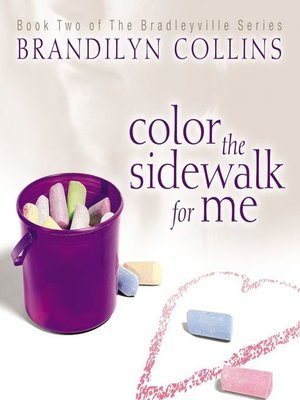
answer. But I’d say Color the Sidewalk
for Me remains probably my favorite book that I’ve written. Which is rather
annoying, since it was only my second novel. (What is it—all downhill from
there?) I got back the rights to the Bradleyville Series recently. All three
novels have now been re-released. Before republishing them, I did a fresh edit.
Reading Sidewalk fourteen years after it
was first published, I am still greatly moved by that book. And reader letters
about the story are terrific. (I have two fat files of letters and emails for Sidewalk alone.) Well, reader letters about all my books tend to be really
positive. But when you get a letter from a man in his fifties who admits to
reading a women’s fiction novel and bawling at the end—that’s a letter to
remember. Of course he also added that if I ever attached his name to that
statement he’d deny it.
I know
authors love all their “children,” but are there certain books you've written
that have become your pets over the years? That’s always a hard question to
answer. But I’d say Color the Sidewalk
for Me remains probably my favorite book that I’ve written. Which is rather
annoying, since it was only my second novel. (What is it—all downhill from
there?) I got back the rights to the Bradleyville Series recently. All three
novels have now been re-released. Before republishing them, I did a fresh edit.
Reading Sidewalk fourteen years after it
was first published, I am still greatly moved by that book. And reader letters
about the story are terrific. (I have two fat files of letters and emails for Sidewalk alone.) Well, reader letters about all my books tend to be really
positive. But when you get a letter from a man in his fifties who admits to
reading a women’s fiction novel and bawling at the end—that’s a letter to
remember. Of course he also added that if I ever attached his name to that
statement he’d deny it.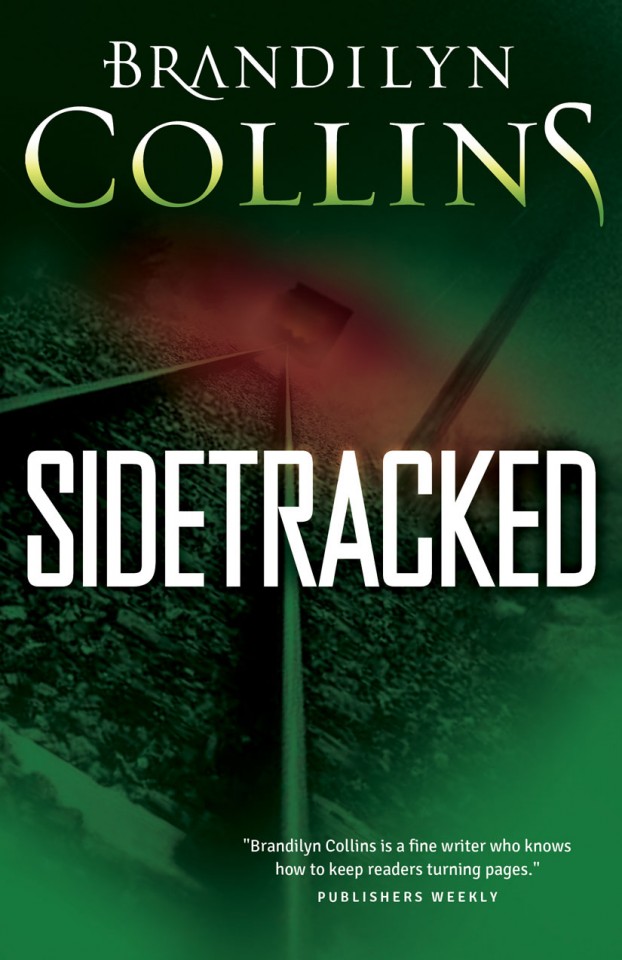 That’s
surprising you should say your favorite is Sidewalk,
since it’s not a Seatbelt Suspense®, for which you’re best known. Yeah, I know. I’ve written a lot of
high tension suspense novels, all of which I do really like. Now that they’re
published, that is. When I’m in the midst of writing a book I always think it’s
horrible and will be the one that will ruin my career forever. Over The Edge stands out to me, because the story line focuses on Lyme disease and the difficult issues of diagnosis and treatment. It’s another very
suspenseful story. At the same time it contains a lot of information about
Lyme. I've received incredible letters from readers about that book—how it’s
helped save their lives.
That’s
surprising you should say your favorite is Sidewalk,
since it’s not a Seatbelt Suspense®, for which you’re best known. Yeah, I know. I’ve written a lot of
high tension suspense novels, all of which I do really like. Now that they’re
published, that is. When I’m in the midst of writing a book I always think it’s
horrible and will be the one that will ruin my career forever. Over The Edge stands out to me, because the story line focuses on Lyme disease and the difficult issues of diagnosis and treatment. It’s another very
suspenseful story. At the same time it contains a lot of information about
Lyme. I've received incredible letters from readers about that book—how it’s
helped save their lives.
Sidetracked is my latest suspense and has proven very popular (over two hundred 5-star reviews on Amazon). Gone to Ground stands out to me because of the Southern characters and the
eyebrow-raising premise. Dark Justice is about terrorism against the electrical grid—something
that’s, unfortunately, all too feasible in today’s world. A lot of my books
are finalists/winners in various awards, but that book holds the record at
six. And you mentioned Kanner Lake. I do love the characters in that series
also. The Hidden Faces series, featuring a
forensic artist, are four of the scariest books I’ve written. I could go on,
but then I’d be mentioning all my suspense novels.
Your book
about the writing process stresses character development as being of supreme
importance. Do you develop your characters first and then place them in a story
or do you develop the plot line and then create characters to fit the
necessities of the action? It HAS to be the former. That’s why
the second point of my four-point brand promise says “character-driven.”
Suspense is considered to be a plot-driven genre. But if you plot out a story
and stick characters into it, they’ll be wooden. Character motivation drives
choices. Those choices in turn drive further conflict. That’s why, when I begin
to write a Seatbelt Suspense®, I know the beginning and ending, but not quite
how I’ll get there. The characters grow as I write. They tell me how we’ll get there together. And if my planned ending
doesn’t work for that character, I’ll learn that, too.
You mention
on your website that in heaven, you shall spend all your time going from
concert to concert. As a fellow music aficionado, share with me some of your
favorite performers on this earthly realm. Rock bands. I’m a rocker from the
70s. Always have been, always will be. Well, since the 70s, anyway. Kansas.
Boston. Journey. Foreigner. Styx. Little River Band, etc. Also I love gospel
music. So yes, I shall run from gospel concert to rock concert. But the rock songs
will have lyrics about God. Best combination ever.
.jpeg) |
| Authors Frank Peretti and Randy Alcorn hamming it up at Brandilyn's lakeside home in Idaho. |
Speaking of
musicians, Frank Peretti’s career moved into a whole different zip code when
Amy Grant began talking about This Present Darkness a few years ago.
Fantasize for a moment: Which performer would you like to see climb on the
Brandilyn Collins bandwagon and which book would it be? Frank happens to live in my neck of
the woods. It’s interesting to hear him tell that story. I don’t think I’d want
a performer. I’d want someone in the news industry that’s highly watched. You
wanna tip one or two of them off about me-that would be great.
Note: Read the first chapters of all Brandilyn’s books at her website. You can follow her on Facebook and Twitter.
Note: Read the first chapters of all Brandilyn’s books at her website. You can follow her on Facebook and Twitter.


.jpg)

